1. Why are 5″ steel pipe bollards less common than other bollard sizes?
5″ steel pipe bollards are less commonly specified than standard 4″ or 6″ bollards because 5″ pipe is produced less frequently at steel mills. As a result, some suppliers may not stock it regularly, which can make availability limited or pricing higher through distributors.
Because Bollards Plus manufactures bollards in-house and sources steel directly, we are able to provide reliable availability of 5″ bollards without the supply constraints often found through general pipe suppliers.
2. Are 5″ steel bollards stronger than 4″ bollards?
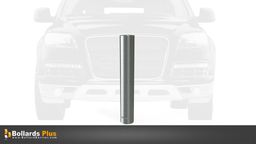
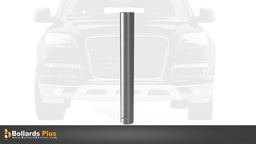
Yes. A 5″ steel pipe bollard provides greater structural strength than a 4″ bollard due to its larger diameter and increased steel mass. This added strength can provide improved vehicle impact resistance while still maintaining a slimmer profile than larger 6″ or 8″ bollards.
For many projects, a 5″ bollard offers a balanced combination of protection, cost, and visual appearance.
3. Why are 5″ bollards often overlooked in facility design?
Because 5″ pipe is less commonly stocked and discussed than other diameters, it is often overlooked during the design phase of bollard protection systems. Many facility plans default to either 4″ bollards for basic low -traffic, low-risk areas or 6″ bollards for heavier-duty applications.
However, a 5″ bollard can provide an effective middle-ground solution, offering more strength than 4″ posts while avoiding the additional size and cost associated with larger diameters.
4. Why is epoxy primer better than red oxide for bollard coatings?
Epoxy primer provides stronger corrosion protection and better paint adhesion than traditional red oxide primers. Epoxy coatings create a more durable barrier against moisture and environmental exposure, which helps extend the service life of steel bollards.
While red oxide primer is commonly used on raw steel products, epoxy primer is typically a higher-performance coating system for long-term durability.
5. Why is cleaning the steel pipe important before painting bollards?
Steel pipe from general pipe suppliers is often coated with mill oils, lacquer, or surface contaminants that protect the steel during storage and shipping. If these residues are not properly removed before painting, they can prevent coatings from bonding correctly and lead to premature paint failure.
At Bollards Plus, pipe is properly cleaned and prepared prior to coating, which helps ensure strong paint adhesion and longer-lasting finishes.