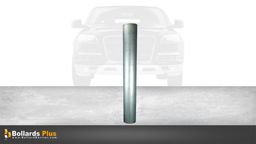
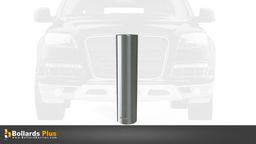
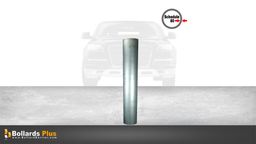
1. When should 8″ steel pipe bollards be used instead of smaller diameters?
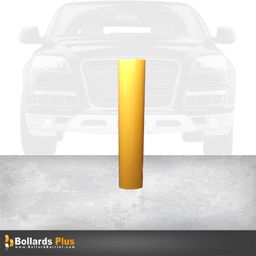
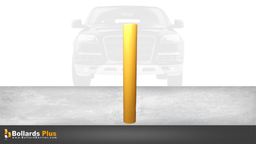
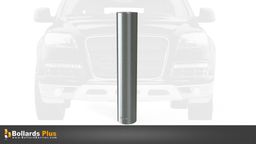
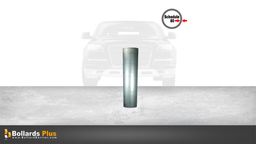
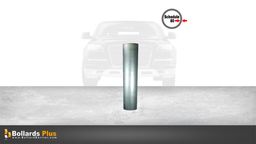
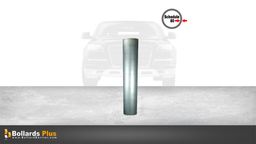
8″ steel pipe bollards are typically used in locations where greater vehicle protection is required than smaller bollard diameters can provide. Their larger diameter and increased steel mass provide significantly greater resistance to bending or deformation if contacted by a vehicle.
Because of this, 8″ bollards are commonly specified for high-risk environments, heavy vehicle exposure areas, and facilities where stronger perimeter protection is required.
2. Are 8″ steel pipe bollards used for theft prevention?
Yes. In some commercial environments, 8″ steel bollards are installed specifically to help deter vehicle-assisted break-ins, sometimes referred to as “ram-raid” theft. Businesses such as gun stores, smoke shops, motorcycle dealers, ATV retailers, and other high-value merchandise locations may use larger diameter bollards to help reduce the risk of vehicles being used to breach storefronts or entry points.
The larger diameter and heavier appearance of 8″ bollards can act as both a physical barrier and a visible deterrent.
3. Does a larger diameter like 8″ improve impact performance?
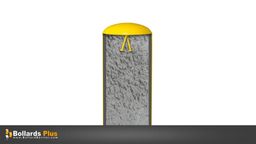
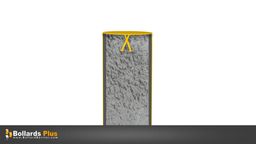
Yes. Increasing the diameter significantly improves resistance to deformation by increasing section modulus and overall rigidity. While not a crash-rated system, an embedded 8″ bollard offers greater impact resistance than 6″ or smaller diameters when properly embedded in concrete.
4. What heights are commonly specified for 8″ inground steel pipe bollards?
8″ bollards are often specified in taller configurations to maximize visibility and deterrence, especially in open or high-traffic areas. Height selection is typically coordinated with embedment depth to ensure the larger diameter translates into effective below-grade performance.
5. Where are 8″ steel pipe bollards typically used?
8″ bollards are frequently installed in locations exposed to large vehicle traffic or high-risk impact conditions, including:
Truck loading areas and freight lanes
Distribution centers and warehouse facilities
Refineries and industrial plants
Equipment protection zones
Access control points for restricted areas
Their larger diameter provides additional durability in environments where heavy trucks or industrial vehicles may operate.
6. Are 8″ steel pipe bollards used for access control or perimeter protection?
Yes. Because of their size and strength, 8″ steel pipe bollards are often used to help control vehicle access to sensitive areas such as equipment yards, industrial facilities, or restricted entrances.
In these environments, the bollards act as a fixed protective barrier that helps prevent unauthorized vehicles from entering protected areas while still allowing pedestrian movement.
7. When should crash-engineered bollards be considered instead of standard steel pipe bollards?
Standard steel pipe bollards provide strong physical protection for many commercial and industrial applications. However, in high-security or high-risk environments, crash-engineered bollards may be required to meet specific performance standards.
Crash-engineered bollards are designed to withstand defined vehicle impact forces and are commonly used for critical infrastructure, government facilities, and locations requiring enhanced vehicle threat protection.
For projects where higher levels of impact resistance are required, Bollards Plus also offers crash-engineered bollard systems designed for vehicle threat mitigation.