Skip to Content

Everything You Could Ever Want to Know About Choosing a Bolt Down Bollard

When it comes to protecting people, property, and assets, few products offer the versatility, performance, and professional finish of a bolt down bollard. Also known as a baseplate bollard or surface-mounted bollard, this design provides serious impact protection — without core drilling or deep-set concrete footings.

But choosing the right one involves more than just height or color. From mounting methods, plate sizes, welds, and coatings to optional accessories and custom features, every detail affects performance, longevity, and aesthetics.

This guide covers everything you could ever want to know about selecting the perfect bolt down bollard for your site.


Why Choose a Bolt Down (Surface-Mounted) Bollard?

Bolt down bollards anchor directly to existing concrete or asphalt using baseplates and mechanical fasteners, making them ideal where permanent installation isn’t feasible or when quick deployment is required.

They’re widely used in:

  • Warehouses and distribution centers

  • Storefronts and pedestrian areas

  • Parking garages and loading zones

Key advantages include:

  • No core drilling or excavation

  • Removable or relocatable design

  • Professional architectural finish

The Foundation of Every Bollard: Pipe

Every bolt-down bollard begins with the pipe—or post—that forms its core. Selecting the right pipe is essential for both performance and compliance. Options include height, diameter, wall thickness (OD), material type (such as steel or stainless steel), and cap style. Understanding how each of these elements affects strength, durability, and installation ensures you choose the ideal bolt-down bollard pipe for your project—providing long-term safety and protection.

Typical Pipe Sizes and Custom Options

Standard bolt down bollards are fabricated from 4” (Schedule 40) and 6” (Schedule 40 or 80) steel pipe.

For specialized applications, we can customize:

  • 3” diameter for lighter duty

  • 8”, 10”, or 12” diameter for industrial or architectural use

  • Custom square or rectangular sections for modern or space-specific designs

Your pipe size directly affects strength, visibility, and mounting footprint — so matching diameter to use case is key.

Selecting the Right Height

Bolt down bollards are available in a range of heights, typically 24” to 48” above grade, but choosing the right one depends on:

  • Visibility: Taller posts (36”–42”) stand out for traffic guidance.

  • Impact performance: Taller posts can flex more at the base — too tall can reduce resistance.

  • Application: Lower profiles work better for loading dock edges or pallet zones.

The best installations balance visibility, safety, and structural stability.

Why Wall Thickness Matters

Pipe thickness (gauge or schedule) determines how well your bollard resists denting, bending, and impact deformation.

  • Schedule 40 offers balanced strength and weight for most applications.

  • Schedule 80 or heavier walls are used in high-impact or high-traffic zones.

Thicker posts also hold coatings better and provide longer service life — especially when exposed to heavy wear or vehicle contact.

Grinding Welded Caps Smooth

All welded bollard caps are meticulously welded and fully ground smooth after assembly. This process does more than create a clean, professional look; it prevents moisture from pooling on the surface and reducing the risk of corrosion.

A smooth, continuous surface ensures that the powder-coated finish adheres evenly for long-lasting color retention and superior weather protection. This attention to detail helps maintain a uniform, durable coating that resists rust, fading, and wear.

Beyond aesthetics, fully welded and polished caps contribute to pedestrian safety by eliminating sharp edges that could pose a hazard in commercial areas and public spaces.

Building on Strength: The Right Baseplate for Your Bolt-Down Bollard

A strong, well-designed baseplate is essential to the performance of any bolt-down bollard. Without the proper foundation, your bollard won’t deliver the impact resistance or long-term protection your project demands. When selecting your baseplate configurations—including baseplate size, thickness, hole dimensions, material type, and anchoring method—it’s important to ensure each element aligns with your projects specific safety and durability needs. Projects exposed to heavy traffic, high-impact risks, or industrial conditions may require a reinforced baseplate to guarantee maximum protection and performance.

Baseplate Size: Standard and When to Upgrade

Most bolt down bollards use a standard 8” to 10” diameter baseplate made from ½-inch thick steel.

However, baseplate size and thickness should increase if:

  • The bollard is taller or heavier (e.g., over 48”)

  • It will experience higher impact loads

  • The substrate (surface) is thinner or uneven

  • The design includes gussets for reinforcement

A larger or thicker plate distributes force more evenly across the surface, reducing the chance of anchor pull-out or slab damage.

Welding Standards: Why We Use ¼" Welds

Every baseplate is welded to the pipe using a minimum ¼-inch continuous weld — not spot welds or tacks.

This ensures:

  • Structural integrity under repeated stress

  • Consistent load transfer between the post and base

  • Compliance with ASTM and AWS fabrication standards

It’s a small detail that dramatically improves long-term strength.

Double Basepates for Parking Garages

In parking garage applications, bolt down bollards sometimes require a second (upper) baseplate.
This distributes impact load across larger slab areas, especially on post-tension decks or thin concrete floors.

Key considerations:
  • Engineering approval for anchor depth and tension cables

  • Isolation pads to prevent galvanic corrosion between metals

  • Custom bolt patterns for confined space

Strength, Style, and Stability: The Role of Bollard Accessories

Accessories play a key role in the function, durability, and appearance of any bolt-down bollard. While often overlooked, these components can significantly improve long-term performance and visual appeal. From escutcheon covers that conceal hardware and add a polished, protective finish to gussets that reinforce the baseplate, the right accessories can make a lasting difference. Other additions—such as chain loops, through holes, and reflective tape—increase flexibility, visibility, and style without compromising safety. Selecting the right bollard accessories can add visibility and style without compromising safety, helping balance strength, flexibility, and design to meet your project’s unique needs.

Customizing with Chain Loops

Need to create a flexible barrier between posts? Add chain loops.

Chain loops are welded or bolted to the top or midsection of the bollard, allowing chains or cables to run between units.
They’re ideal for:

  • Temporary access control

  • Parking management

  • Pedestrian redirection zones

Available in single- or double-loop configurations, they can be powder-coated or galvanized to match your bollards.

Hardware & Escutcheons

Your bollard’s performance starts at the base. Using high-quality anchors and bolts ensures stability and impact resistance.

  • Opt for galvanized or stainless-steel hardware for corrosion protection.

  • Choose tamper-proof bolts in public or unsecured areas.

  • Add escutcheons (trim rings) for a clean, finished look — they cover hardware, block debris buildup, and elevate the visual presentation of any installation.

Gussets: Reinforcing the Connection

Adding gussets — triangular support plates between the post and baseplate — increases resistance to bending at the weld point.

They’re highly recommended for:

  • Heavier bollards

  • Thin slabs or asphalt surfaces

  • High-impact environments like loading bays

Advanced Coating Systems: Maximum Protection for Every Bollard

A bollard’s finish is more than just its final touch—it’s its first line of defense. The right finish type protects against rust, UV exposure, and everyday wear, preserving both the performance and appearance of your bolt-down bollard over time. A durable coating system not only enhances longevity but also ensures your installation maintains its professional look, even in harsh environments. Choosing a high-quality finish means choosing long-term protection, reliability, and visual impact that stands the test of time.

The Power of Proper Paint: Epoxy Base + 2k Gloss Topcoat

For ultimate rust and UV protection, we use a two-stage epoxy primer topped with a high-gloss 2K polyurethane clear coat.

This system:

  • Seals the steel and minimizes under-film corrosion

  • Resists fading and chalking from UV exposure

  • Creates a smooth, easy-to-clean surface

Compared to standard bollard paint, this is top-of-the-line in durability and weather resistance — a true industrial-grade coating system.

Galvanizing: Drain Holes and Dual-Finish Durability

When a bollard is hot-dip galvanized, it’s coated inside and out with zinc for unmatched corrosion protection.

During this process, drain holes are added to allow molten zinc to flow freely and prevent trapped air or moisture.

After galvanizing, the bollard can still be powder-coated, providing both long-term rust protection and a premium finish.

Choosing the Best Installation Method

Selecting the right installation method is key to ensuring your bollards perform as intended—providing the perfect balance of safety, stability, and efficiency. Every site has its own demands, and factors like surface type, traffic flow, and accessibility all play a role in determining the best fit. Choosing the proper installation approach helps guarantee long-term reliability and seamless integration into your environment.

Anchors and Epoxy Systems for Bolt-Down Bollards

Bolt-down bollards are named for how they’re installed—securely bolted or surface-mounted into concrete for lasting protection.

For added tensile strength, use our epoxy anchoring system to reinforce against loosening caused by:

  • Heavy vehicle impact

  • Equipment or traffic vibration

  • Harsh weather conditions

Choosing the right anchoring system keeps your bollards firmly in place—performing exactly as designed.

Concrete-Filled Bolt Downs — When and Why

Filling your bolt down bollards with concrete adds mass and rigidity, enhancing strength and reducing post flex.

We recommend filling onsite rather than prefilled because:

  • Reduced shipping weight saves cost

  • Easier installation before filling

  • Ensures a full, void-free fill

Finish the job with our wet-set cap accessory, which seals the top neatly and prevents water intrusion.

Below-Grade Bolt Down Installations

Some bolt down bollards are partially recessed or installed slightly below grade to:

  • Align with finished flooring in architectural settings

  • Conceal baseplates for aesthetic reasons

  • Add a layer of strength when combined with grout or thin concrete topping

This hybrid approach offers the look of in-ground models with the flexibility of surface mounting.

Ultra Light = Ultra Affordable

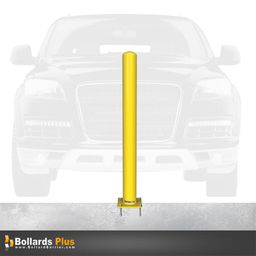
Product Carousel - Ultra Light Bolt-Down Bollard - 4"x42", Safety Yellow

Not every project needs heavy-duty impact resistance. Our ultra-light bolt down bollards are designed for visual guidance, zoning, and cost-effective protection.

Lightweight yet durable, ultra-light bollards provide a clean, professional look that enhances organization and visibility across a variety of environments. They’re an excellent choice for:

  • Pedestrian barriers

  • Indoor warehouse zoning

  • Temporary delineation

Easy to install and simple to relocate, these surface-mounted bollards allow for quick setup and flexible placement—making them ideal for evolving spaces or short-term applications. With a professional finish and dependable performance, our ultra-light bolt-down bollards deliver smart, affordable protection that looks good and works hard.

Shop Ultra-Light Bollards

IBC-Engineered Bolt-Down Bollards (Impact Protection & Code Compliance)

Bollards Plus is proud to offer our Impact Guard IBC6k bollard product line, engineered to meet International Building Code (IBC) 6,000lb, providing impact resistance against vehicle contact at low speeds and ensuring compliance for pedestrian pathways, parking garages, and building perimeters. This IBC rating confirms that the bollard meets a standardized impact load — typically 6,000lbs applied at 27 inches above grade — making it suitable for projects requiring code compliance and documented impact performance.

It’s important to note that IBC-engineered bolt-down bollards are not crash-rated bollards, nor are they designed for high-speed vehicle mitigation. Because bolt-downs mount to concrete using surface anchors rather than embedment, they do not dissipate collision energy the same way a deep-set crash-rated foundation does.

For environments requiring true crash resistance or anti-ram security, in-ground crash-rated bollards or reinforced foundation systems should be used. However, IBC-engineered bolt-down bollards remain the ideal solution for low-speed protection, pedestrian safety, ADA-compliant site design, architectural guidance, and retrofit applications where core drilling isn’t possible.

Shop Impact Guard IBC6K Bollards
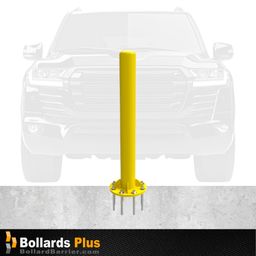
Product Carousel - Impact Guard IBC6K CB - 5"x48", Safety Yellow

Why Choose Us?

Choosing the right bolt down bollard means balancing:

  • Mounting surface and hardware quality

  • Baseplate size and weld integrity

  • Finish protection, color, and corrosion resistance

  • Optional upgrades like gussets, chain loops, or concrete filling

At Bollards Plus, every bolt down bollard is engineered for durability, precision, and performance — backed by the industry’s largest range of styles and customization options.