Skip to Content

Parking Lot Safety Bollards & Installation

Affordable Protection for High-Traffic Areas

Parking lots are one of the most vulnerable spaces for accidental damage and pedestrian injury. Vehicles, delivery trucks, and people move in close proximity, and a single mistake can cause costly property damage or life-threatening injury. Parking lot safety bollards provide an affordable, effective solution—helping to deter vehicles, guide traffic, and protect assets without the expense of crash-rated systems.

Built from heavy-duty U.S. steel, our bollards are available in embedded, surface-mounted, and removable configurations. Whether used to protect storefronts, utilities, signage, or pedestrian walkways, bollards are a proven way to make parking areas safer, more organized, and easier to navigate.
How Parking Lots Use Bollards

Access Control

Bollards serve as simple but effective access control points, restricting vehicles from entering driveways, private lanes, or maintenance areas. Removable and chain-linked bollards can temporarily close off entrances while maintaining flexibility for service or emergency access.

Trash Receptacle Protection

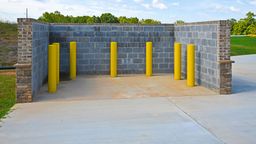
Dumpster areas and trash receptacles are frequent targets of accidental collisions. Installing bollards around receptacles prevents vehicles from backing into enclosures and damaging walls or fencing.

Parking Cover & Canopy Post Protection

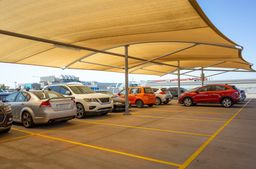
Steel or aluminum canopy posts that support covered parking structures are highly vulnerable to vehicle strikes. Bollards placed at each corner or post absorb the impact before it reaches the structural column, extending the lifespan of the entire structure.

Pedestrian Walkway Safety

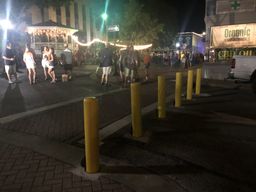
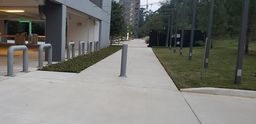
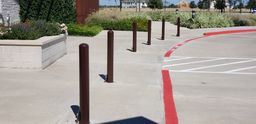
Bollards clearly separate pedestrian paths from vehicle lanes, ensuring people have safe areas to walk. Painted, powder-coated, or sleeved bollards provide high visibility that keeps vehicles from accidentally straying into sidewalks.

ADA & Reserved Parking

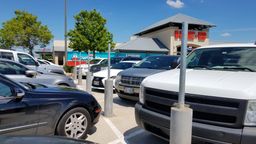
ADA compliance requires clearly marked and protected spaces. Bollards reinforce signage, keep lines visible, and prevent unauthorized parking, especially in reserved spaces for accessibility, visitors, or staff.

Driveway Closures & Chain Barriers

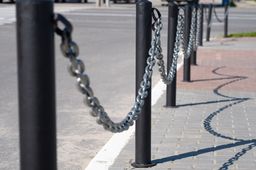
Removable bollards or folding bollards with chain attachments are used to close off driveways, restricted access areas, or fire lanes. This creates a low-cost, flexible barrier system that prevents unauthorized entry while remaining easy to remove.

Equipment Protection (Generators, HVAC, Utilities)

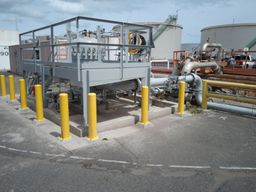
Utility connections, water lines, and HVAC units are expensive to repair if struck. Bollards placed around this equipment block vehicle access and ensure that service areas remain safe and operational.

Preventing Unauthorized Vehicle Paths

Bollards can stop vehicles from cutting across curbs, medians, or landscaped areas to take shortcuts through parking lots. By blocking these paths, bollards protect landscaping and maintain traffic order.

Storefront & Building Protection

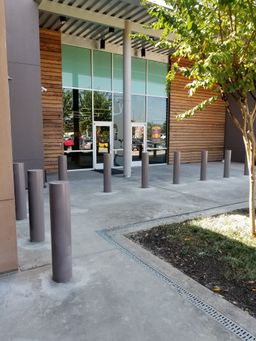
Parking lot bollards are a frontline defense against vehicles striking glass windows, doors, and building entrances. A simple line of steel bollards outside an entryway dramatically reduces the risk of damage from driver error.

Parking Lot Signage

Bollards are commonly used to mount and protect:

  • Rectangular parking signs (reserved, ADA, directional).

  • Inground bollards with sign posts for long-term durability: By shielding signs from impact, bollards ensure compliance and visibility without costly replacements.

Parking Lot Bollard Installation

Correct installation is just as important as the bollard itself. Choosing the right method ensures long-term durability and performance. Parking lot bollards can be installed in asphalt, concrete, curbs, and walkways—each requiring different techniques and hardware.

Installing Bollards in Asphalt

  • Surface-Mounted Bollards in Asphalt:
    Asphalt is softer and less dense than concrete, so anchor choice is critical. Longer wedge anchors or sleeve anchors (typically 6"–8") are recommended, but only when installed through asphalt into a reinforced concrete pad beneath. Without a concrete pad, anchors can loosen over time.

  • Inground Bollards in Asphalt:
    For permanent protection, installers typically cut a core hole through the asphalt, then auger into the soil below. The bollard is set in concrete fill that extends at least 18"–48" below grade. This creates a stable foundation while keeping the asphalt surface flush around the post.

Installing Bollards in Concrete

  • Surface-Mounted Bollards in Concrete:
    Concrete offers a stronger base, making wedge anchors or epoxy anchors highly effective. Anchors should penetrate at least 4" into the slab, with deeper anchorage (6"+) preferred when pad thickness allows. Always check pad depth to avoid cracking or pull-out issues.

  • Inground Bollards in Concrete:
    Installers core-drill a hole into the slab, set the bollard, and fill the cavity with high-strength concrete. Depth varies by bollard size, but a minimum embedment of 18"–48" is typical for parking lot safety bollards.

Installing on Curbs & Walkways

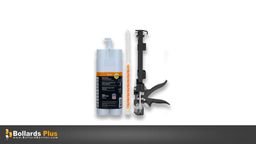
Bollards installed on raised curbs or walkways often need shorter, specialized anchors to avoid cracking thin concrete sections. Epoxy-set threaded rod anchors are often preferred in these locations because they bond securely without expanding pressure that can fracture smaller pads.

What to Expect During Installation


Fixed Embedded (Inground) Bollards

Surface-Mounted Bollards

Equipment Commonly Used:
  • Core drill or auger for boring holes.

  • Concrete saw for cutting asphalt or concrete.

  • Ready-mix concrete delivery or portable mixer.

  • Rebar, cages, or sleeves for reinforcement (as specified).

  • Safety barricades and cones for traffic/pedestrian control.

Process & Site Impact:
  • Expect cutting into surfaces and excavating holes, which generates dust, slurry, and debris.

  • Concrete is poured and requires 24–48 hours cure time before heavy use.

  • Temporary barriers or traffic rerouting may be needed during curing.

  • Cleanup includes patching around the bollard base and hauling away debris.

Equipment Commonly Used:
  • Hammer drill with masonry bits.

  • Wedge anchors, sleeve anchors, or epoxy anchors.

  • Torque wrenches to set hardware to spec.

  • Grinder for smoothing edges or cutting small adjustments.

  • Sealants to protect drilled holes from moisture.

Process & Site Impact:
  • Anchoring requires drilling into concrete or asphalt (with concrete pad below).

  • Minimal excavation or cutting is required compared to embedded bollards.

  • Installers typically complete surface-mount bollard projects in a few hours, depending on the number of posts.

  • Dust and debris from drilling is limited and easier to clean up than full excavation.

Typical Installers

Most customers hire concrete contractors, paving contractors, or fence/install companies experienced in small-scale civil work. In some cases, facility maintenance teams can perform installations if they have the right tools.

Typical Costs

Costs vary by location, but customers can expect:
  • Surface-mounted bollards: $150–$300 per bollard (labor only).

  • Inground bollards: $300–$800 per bollard (labor, concrete, and equipment).

  • Specialty installs (curbs, ADA compliance, or decorative covers): additional $100–$300 per unit.

  • Bulk projects (10+ bollards) often qualify for lower per-bollard rates.

Process & Disruption:
  • Cutting & drilling: Installers will cut or core into asphalt/concrete, generating dust and debris.

  • Concrete mixing & pouring: For inground installs, expect concrete trucks or mixers on-site. Fresh concrete needs 24–48 hours cure time before heavy use.

  • Cleanup: Installers typically patch surfaces flush and remove debris, but temporary mess (dust, slurry, asphalt chips) should be expected.

Choosing the Right Method

  • For permanent, high-strength protection, inground installations in concrete provide the best longevity.

  • For flexible access control, surface-mounted or removable bollards are recommended.

Don't forget your hardware!

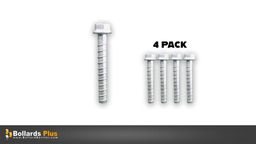
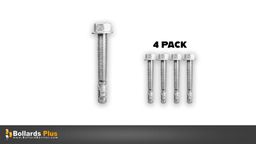
No matter where they are installed, surface mounted bollards require anchors to ensure their stability and durability.

Don't wait until the last minute and risk prolonging your project's timeline—get them now for an efficient installation that delivers long-lasting protection you can count on!

Parking Lot Bollards Don’t Have to Be Ugly

Just because a bollard is designed for safety doesn’t mean it has to detract from your property’s appearance. Parking lot bollards can be finished in a variety of attractive styles and materials that blend safety with design:

  • Stainless Steel Covers – Sleek, polished covers that slip over steel pipe for a modern look without sacrificing protection.

  • Custom Colors – Powder-coated or painted to match branding, architectural palettes, or wayfinding needs.

  • Decorative Bollards – Enhance appearance with features like reveals, collars, sphere tops, or pawn-style designs.

  • Architectural Integration – Decorative surface-mounted or removable options allow safety bollards to complement site aesthetics while still doing their job.

This makes bollards a design feature as well as a safety barrier, keeping parking lots safe and visually appealing.

Safety Designed to Your Standards

When standard options aren’t enough, we make it easy to get exactly what you need. Our team can build to your spec directly from uploaded drawings or help you customize any product from our extensive catalog. Every bollard is fabricated in-house at our U.S. facility, giving you unmatched flexibility and speed.

  • No Order Minimums – Whether you need one bollard or one hundred, we’ll build it.

  • Custom Colors at No Extra Charge – Match your brand, facility, or safety standards without added cost.

  • Full Manufacturing Capabilities – From heavy-duty welding and precision fabrication to advanced coatings and finishing.

  • Fast Turnaround – Short lead times and responsive production schedules keep your project on track.

  • Nationwide Shipping – Reliable delivery direct to your site, anywhere in the country.

With the largest selection of safety bollards available and complete customization capabilities, we make it simple to get the perfect solution—on time, on spec, and built to last.

Shop & Customize BollardsBuild-to-Spec from Drawing